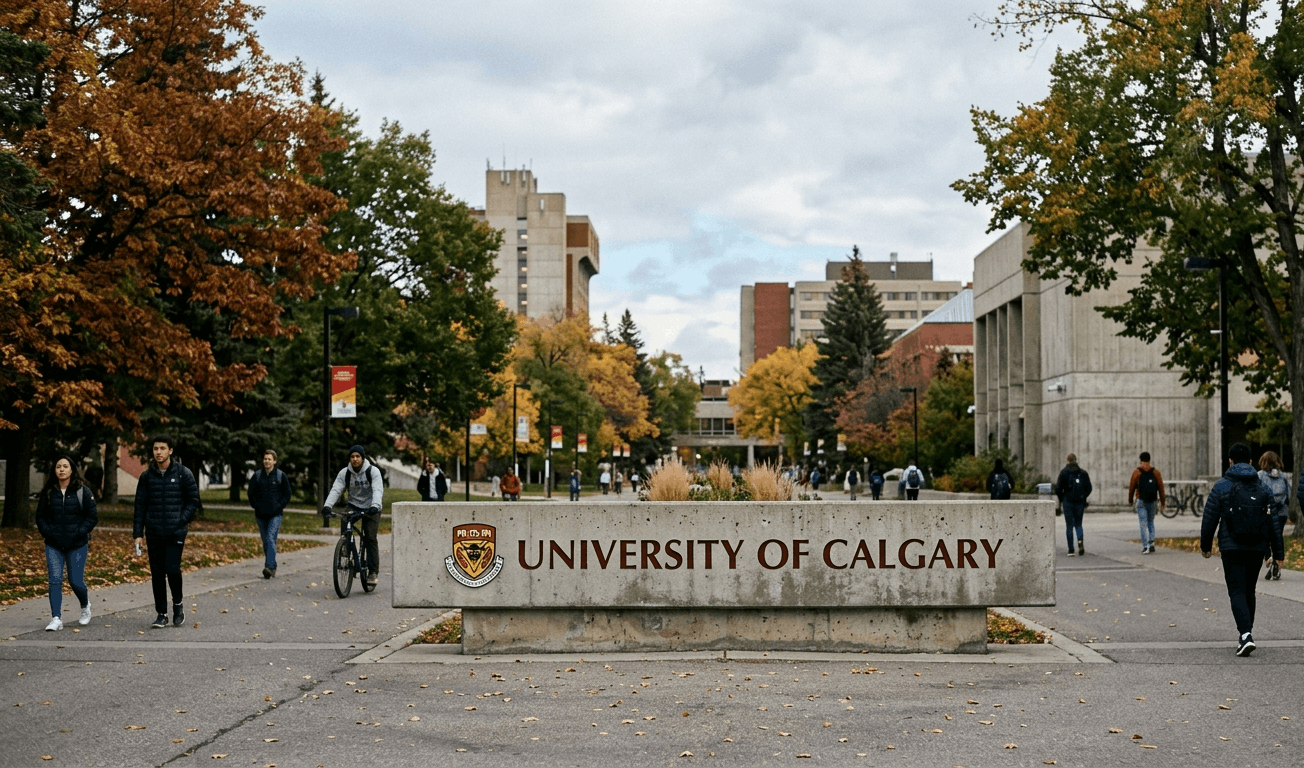

Universities in Canada
Table of Contents
- Best Universities in Canada for Students
- Top Courses Offered by Universities in Canada
- Tuition Fees at Universities in Canada
- Cost of Living in Canada for Students
- Scholarships for Students at Universities in Canada
- Admission Requirements for Universities in Canada
- Application Documents Required for Universities in Canada
- Major Intakes at Universities in Canada
- How to Apply to Universities in Canada
- Career Opportunities After Studying at Universities in Canada
- Final Thoughts from Author
Canada is home to some of the world's top universities, with around 100 public universities offering undergraduate, postgraduate, doctoral, and professional programs.
The universities are known for quality education, research opportunities, co-op programs, and globally recognised degrees.
Top-tier institutions such as the University of Toronto, McGill University, and the University of British Columbia rank among the world's top universities, making Canada a preferred choice for students seeking high-quality education and strong career opportunities.
The table below gives a quick overview of Universities in Canada:
Particular | Details |
Number of Public Universities | Around 100 |
Programs Available | 16,000+ |
Ranking Source | QS World University Rankings 2027 |
Average Undergraduate Tuition | CAD 41,746 (≈ INR 28 L) |
Average Graduate Tuition | CAD 24,028 (≈ INR 16 L) |
Main Intake | September |
English Tests | IELTS, TOEFL, PTE, Duolingo |
Work Rights | 24 hours/week (eligible students) |
PGWP | Up to 3 years (eligible programs) |
Proof of Living Funds | CAD 22,895 (≈ INR 15 L) outside Quebec |
Best Universities in Canada for Students
Top Universities in Canada are known for strong academics, research, employability, and support for students.
Universities across the country offer a wide range of undergraduate, postgraduate, doctoral, and professional programs in different fields of study.
Before choosing a university, compare factors such as course quality, tuition fees, scholarships, location, co-op opportunities, and Post-Graduation Work Permit (PGWP) eligibility.
The table below compares the Best Universities in Canada based on QS World University Rankings 2027.
University | QS World University Rankings 2027 | Approx. Annual International Tuition Fee |
McGill University | 30 | CAD 25,000-63,000 (≈ INR 17 L-42 L) |
University of Toronto | 32 | CAD 45,000-68,000 (≈ INR 30 L-46 L) |
University of British Columbia | =45 | CAD 43,000-61,000 (≈ INR 29 L-41 L) |
University of Alberta | 96 | CAD 32,000-46,000 (≈ INR 21 L-31 L) |
University of Waterloo | =113 | CAD 37,000-60,000 (≈ INR 25 L-40 L) |
Western University | =142 | CAD 31,000-56,000 (≈ INR 21 L-38 L) |
Université de Montréal | =162 | CAD 25,000-40,000 (≈ INR 17 L-27 L) |
McMaster University | =174 | CAD 33,000-58,000 (≈ INR 22 L-39 L) |
Queen's University at Kingston | =179 | CAD 29,000-56,000 (≈ INR 19 L-38 L) |
University of Ottawa | =228 | CAD 30,000-53,000 (≈ INR 20 L-36 L) |
Top Courses Offered by Universities in Canada
Universities in Canada offer flexible programs at undergraduate, postgraduate, doctoral, certificate, and professional levels. Students can choose courses based on their academic background and career goals.
Top courses in Canada include computer science, engineering, business, MBA, data science, public health, nursing, finance, and biotechnology.
Many universities also offer co-op or internship opportunities, helping students gain practical work experience while studying.
The table below shows popular courses at Best Universities in Canada:
Course Area | Popular Programs | Typical Duration |
Computer Science & IT | Computer Science, Artificial Intelligence, Cybersecurity, Data Science | 2-4 Years |
Engineering | Civil, Mechanical, Electrical, Software, Chemical Engineering | 2-4 Years |
Business & Management | BBA, MBA, Finance, Marketing, International Business | 1-4 Years |
Healthcare | Nursing, Public Health, Biomedical Sciences, Pharmacy | 2-4 Years |
Science | Biotechnology, Environmental Science, Physics, Chemistry | 2-4 Years |
Arts & Social Sciences | Psychology, Economics, Sociology, Political Science | 3-4 Years |
Research Programs | Masters by Research, MPhil, PhD | 2-5 Years |
Also Read: Short-Term Courses in Canada for Indian Students
Tuition Fees at Universities in Canada
Tuition fees in Canada vary significantly based on your residency status, university, course, province, and study level.
Professional courses such as MBA, Medicine, Dentistry, and Engineering usually have higher tuition fees than arts or humanities programs.
The table below shows average tuition ranges:
Degree Level | Annual Tuition Fees | Approx. INR Equivalent |
Bachelor's Degree | CAD 30,000-50,000 | ≈ INR 20 L-34 L |
Master's Degree | CAD 20,000-45,000 | ≈ INR 13 L-30 L |
MBA | CAD 35,000-95,000 | ≈ INR 23 L-64 L |
PhD | CAD 8,000-25,000 | ≈ INR 5 L-17 L
|
Cost of Living in Canada for Students
Besides tuition fees, students should plan for accommodation, food, transportation, utilities, health insurance, and personal expenses while studying in Canada.
The total cost of living depends on the city and lifestyle, with Toronto and Vancouver generally being more expensive than cities such as Edmonton, Winnipeg, Halifax, and Saskatoon.
Planning your budget in advance can help you manage your expenses more effectively.
The table below gives a student-friendly monthly estimate.
Expense | Monthly Cost | Approx. INR Equivalent |
Accommodation | CAD 700-1,500 | ≈ INR 47K-1 L |
Food & Groceries | CAD 300-500 | ≈ INR 20K-34K |
Transportation | CAD 100-160 | ≈ INR 7K-11K |
Utilities & Internet | CAD 150-250 | ≈ INR 10K-17K |
Health Insurance | CAD 50-150 | ≈ INR 3K-10K |
Personal Expenses | CAD 150-300 | ≈ INR 10K-20K |
Must Read: Study in Canada for Free for Indian Students
Scholarships for Students at Universities in Canada
Scholarships at Universities in Canada include entrance awards, merit scholarships, need-based funding, research assistantships, government scholarships, and external fellowships.
Some awards help reduce tuition fees, while a few Fully Funded Scholarships in Canada cover tuitions, living expenses, books, and other study-related costs.
Students should apply early, as many scholarships have separate application deadlines and limited funding.
The table below highlights some of the popular scholarships available for students in Canada:
Scholarship | Benefits |
Lester B. Pearson International Scholarship | Full tuition, books, residence, incidental expenses |
McCall MacBain Scholarship | Tuition + CAD 2,300 (≈ INR 1.5 L)/month living stipend |
Vanier Canada Graduate Scholarship | CAD 50,000 (≈ INR 34 L)/year |
UBC International Major Entrance Scholarship | CAD 10,000-25,000 (≈ INR 7 L-17 L) |
University Entrance Scholarships | Varies by university (Partial Tuition Support) |
Admission Requirements for Universities in Canada
Eligibility for Universities in Canada depends on the course level, university, and program you choose.
Undergraduate applicants usually need to complete Class 12 with the required subjects, while postgraduate applicants generally need a relevant bachelor's degree and supporting application documents.
International students must also meet the university's English language and study permit requirements before starting their course.
Academic Eligibility Criteria for Universities in Canada
Academic requirements for Universities in Canada vary by university and program.
Most universities expect applicants to have a good academic record and meet the required subject prerequisites.
Competitive programs may have higher admission standards, while some postgraduate courses may also ask for additional requirements based on the program.
The table below shows common academic requirements.
Level | Common Requirement | Notes |
Bachelor’s | Class 12 or equivalent | 70%-85%+ for competitive programs |
Master’s | Relevant bachelor’s degree | Usually B grade/3.0 GPA or higher |
MBA | Bachelor’s + work experience | 1-3 years work experience (at many universities) |
PhD | Master’s/research background | Research proposal may be needed |
Note: Students should always check the official university website for the latest admission requirements before applying.
English Language Proficiency Requirements for Universities in Canada
Most Canadian universities require international students to demonstrate English language proficiency before admission. The accepted test and minimum score vary by university, program, and study level.
Besides IELTS Academic, many institutions also accept TOEFL iBT, PTE Academic, Duolingo English Test, CAEL, or other approved English language examinations.
Students should always check the official university website for the latest requirements before applying.
The table below shows common English test expectations.
Test | Common Score Range | Used For |
IELTS Academic | 6.5-7.0 | UG and PG |
TOEFL iBT | 86-100 | UG and PG |
PTE Academic | 60-70 | UG and PG |
Duolingo | 110-125 | Select universities |
CAEL | University-specific | Selected Universities |
Note: Many universities may waive the English language requirement if you have completed previous education in English.
Application Documents Required for Universities in Canada
Students should prepare their application documents before the deadline, as missing or incorrect files can delay admission decisions.
While the exact requirements vary by university and program, most Canadian universities ask for academic records along with the following documents.
The table below lists the common documents required for admission to Universities in Canada:
Document | Required For | Notes |
Academic Transcripts | UG/PG | Class 10, 12, bachelor’s, or master’s |
English Test Score | International applicants | IELTS/TOEFL/PTE/DET |
SOP | Mostly PG/MBA | Explains goals and course choice |
LORs | Mostly PG/MBA | Academic or professional references |
Resume/CV | PG/MBA/PhD | Required for professional programs |
Passport | All students | Valid passport copy |
Portfolio | Creative courses | Design, architecture, fine arts |
Canada Study Permit Requirements for Universities in Canada
Students planning to study at Universities in Canada must apply for a Canada Study Permit after receiving a Letter of Acceptance (LOA).
Depending on the program and current IRCC guidelines, some applicants may also need a Provincial Attestation Letter (PAL) before submitting their study permit application.
Students must also meet the financial and immigration requirements set by the Government of Canada.
The table below explains key study permit requirements.
Requirement | Details |
Letter of Acceptance (LOA) | Required from a Designated Learning Institution (DLI) |
Provincial Attestation Letter (PAL) | Required in many cases (subject to IRCC exemptions) |
Proof of Funds | Tuition + Living Expenses + Return Travel |
Living Expense Requirement | CAD 22,895 (≈ INR 15 L) outside Quebec |
Study Permit Fee | CAD 150 (≈ INR 10,000) |
Biometrics Fee | CAD 85 (≈ INR 6,000) |
Medical Examination | Required for some applicants |
Police Clearance Certificate | May be required |
Major Intakes at Universities in Canada
Canada offers three main intakes: Fall, Winter, and Summer.
The Fall intake is the most popular, with the widest choice of programs and the highest number of available seats.
Students who miss the Fall intake can consider the Winter intake, while the Summer intake is available for selected courses and universities.
The table below compares the main intakes.
Intake | Classes Begin | Typical Application Period |
Fall Intake | September | January - March (varies by university) |
Winter Intake | January | August - November |
Summer Intake | May / July | October - February |
Note: Since application deadlines vary, students should always check the official university website before applying.
How to Apply to Universities in Canada
The admission process for the Best Universities in Canada is simple if you start planning early (at least 10-12 months before your target intake).
Students should research universities, check the eligibility requirements, prepare the necessary documents, and submit their applications before the deadline.
The table below shows the basic admission process:
Step | What You Need to Do |
1 | Shortlist universities and programs |
2 | Check eligibility requirements |
3 | Take IELTS/TOEFL/PTE (if required) |
4 | Prepare SOP, LORs, resume, and transcripts |
5 | Submit your online application |
6 | Pay the application fee CAD 100-250 (≈ INR 7K-17K) |
7 | Receive and accept the offer letter |
8 | Arrange finances and apply for a Study Permit |
Career Opportunities After Studying at Universities in Canada
Graduates from the Top Universities in Canada can build careers in technology, finance, healthcare, engineering, consulting, data science, research, and many other growing industries.
After graduation, eligible students can apply for a Post-Graduation Work Permit (PGWP) for up to 3 years, allowing them to gain valuable Canadian work experience.
The table below shows common career options after studying in Canada:
Job Role | Average Annual Salary | Best Degree Background |
Software Engineer | CAD 75,000-120,000 (≈ INR 50 L-80 L) | CS, software engineering |
Data Analyst | CAD 60,000-90,000 (≈ INR 40 L-60 L) | Data science, analytics |
Financial Analyst | CAD 60,000-85,000 (≈ INR 40 L-57 L) | Finance, MBA, economics |
Mechanical Engineer | CAD 65,000-95,000 (≈ INR 44 L-64 L) | Nursing, health sciences |
Registered Nurse | CAD 70,000-100,000 (≈ INR 47 L-67 L)
| Engineering |
Business Analyst | CAD 65,000-95,000 (≈ INR 44 L-64 L)
| Business, IT, MBA |
Note: salaries vary by employer, city, province, work experience, and industry.
Final Thoughts from Author
Universities in Canada are a great choice for students looking for quality education, practical learning, and strong career opportunities.
However, don't choose a university based only on its ranking. Compare other factorsas well such as course quality, tuition fees, scholarship opportunities, cost of living, co-op options, and Post-Graduation Work Permit (PGWP) eligibility before making your decision.
studying in Canada can be a worth if you choose a course that matches your career goals and has good job opportunities after graduation.
Taking time to research and plan carefully can help you get the best value from your education and future career.
Planning to Study in Canada? Book a free 1:1 counselling session with our study abroad experts for personalised guidance.